CPA and Bookkeeping Rockwall AlternativeWhen two invoices share one company
Two invoices for one company is what we see most beside the lake. Two programs each recorded the same job, or only one of them did.
See the pair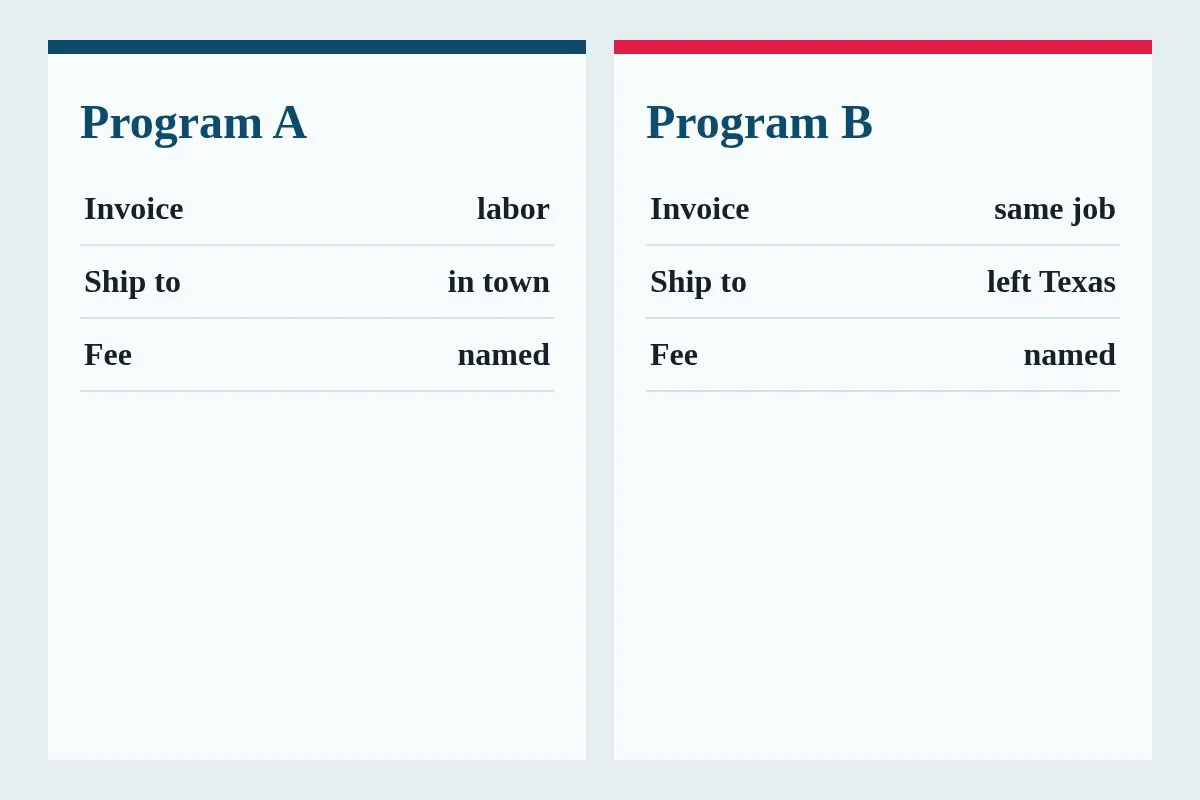
Where the second invoice comes from
Read Where the second invoice comes from
A company around Rockwall often bills in the program the crew already knows, then keeps the bank in a second program because that is where the feed lives. Both can be careful. They are still two memories of one sale.
The expensive version is the double. The field program invoices the job, and someone also types an invoice in the books so the deposit will have a home. Revenue is now twice the work. The cheap looking version is the opposite. The field program invoices, the customer pays, and the books never see an invoice, so the deposit sits as a mystery credit.
We start by picking one program as the place an invoice is born. The other program may still hold the bank. It may not invent a second invoice for the same job. If both already did, one of them is voided, and the void names the survivor.
The deposit is the referee
Read The deposit is the referee
Customers do not pay invoices. They pay an amount, often with a fee already removed. A 1,000 dollar invoice that arrives as 971 dollars is not a short pay until the fee is on its own line. We split that deposit so the invoice can close in full and the fee can be an expense.
When two invoices are open for amounts that add up to the deposit, the temptation is to close both and feel finished. That is right only when there really were two jobs. If there was one job, closing both hides the duplicate inside a tidy bank rec. We would rather leave one invoice open and ugly for a week.
Uncleared items older than a season get a name. A check the vendor says they never received is reissued or voided. A deposit in transit from last spring is not still in transit. It was recorded twice, or it never happened.
What the month looks like after the pair is one
Read What the month looks like after the pair is one
Statements get quieter. Sales tax stops being a plug, because the taxable sales are the invoices that survived, not an average of two screens. The person who sends the next invoice knows which program to open. That is the whole win, and it is enough.
If you want the return prepared from those months, say so. Leave the return decision until the duplicate invoices have one home. The books come first. The return uses whatever the books can support on the day it is prepared.
We will say when the honest answer is that the two programs already agree and an engagement would be a habit, not a help. Plenty of owners only needed the rule about which program gives birth to the invoice.
Which invoice should survive
Say which program the customer already saw, and which one holds the bank.

You will be talking to the Steven Palmieri practice.
What to read next
A week when both programs stay open
Read A week when both programs stay open
Some owners are not ready to shut a program down, and they should not be pushed. The crew can keep billing where they already know the buttons. The month still needs one rule. New invoices are born in that program only. The book program receives payments, fees, and the bank. It does not get a second typing of the same job just so a deposit has a name.
During the overlap we keep a simple tally. Jobs billed this week. Deposits that found their invoice. Deposits that did not. We read that tally on the weekly call, and we will not stand up a third file just to hold it. If the unmatched pile grows, the rule is being broken and we say so in the same week, not at the return.