
CPA and Bookkeeping Rockwall Alternative. CPA Rockwall.The month that matches the bank
Two invoicing programs, one bank statement, and a month the bank will not sign. We close the books, then the return uses that month. We trace each deposit to its till and each fee to its program. The ship-to on every invoice shows what left Texas. Both tills and the return stay with Steven Palmieri, working as a Tax CFO, the Entrepreneur's CFO, until the bank will sign the month.
The month the bank will not sign

You will be talking to the Steven Palmieri practice.

Two invoices, one company
Saturday on the water, out among the boats, is a part of the week we enjoy as much as you do. On Monday we ask which till the deposit came from.
Click to see two invoices ›Tap to see two invoices ›
When a carton leaves Texas
The ship-to shows what left Texas.
Click to see goods leaving ›Tap to see goods leaving ›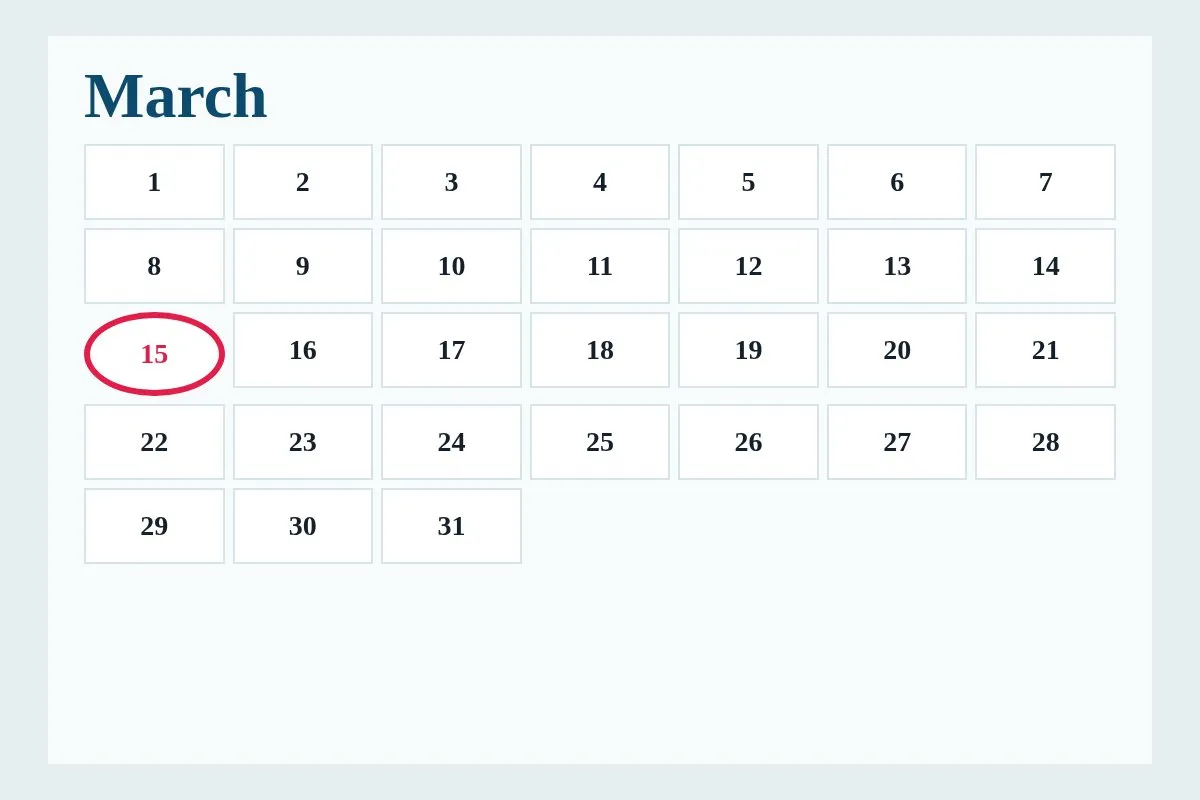
School rate and sales tax
School rate and sales tax have their own dates. Both sit on the same closed month.
Click to see dates ›Tap to see dates ›
Fees in two programs
Each fee still has to meet one deposit.
Click to see programs ›Tap to see programs ›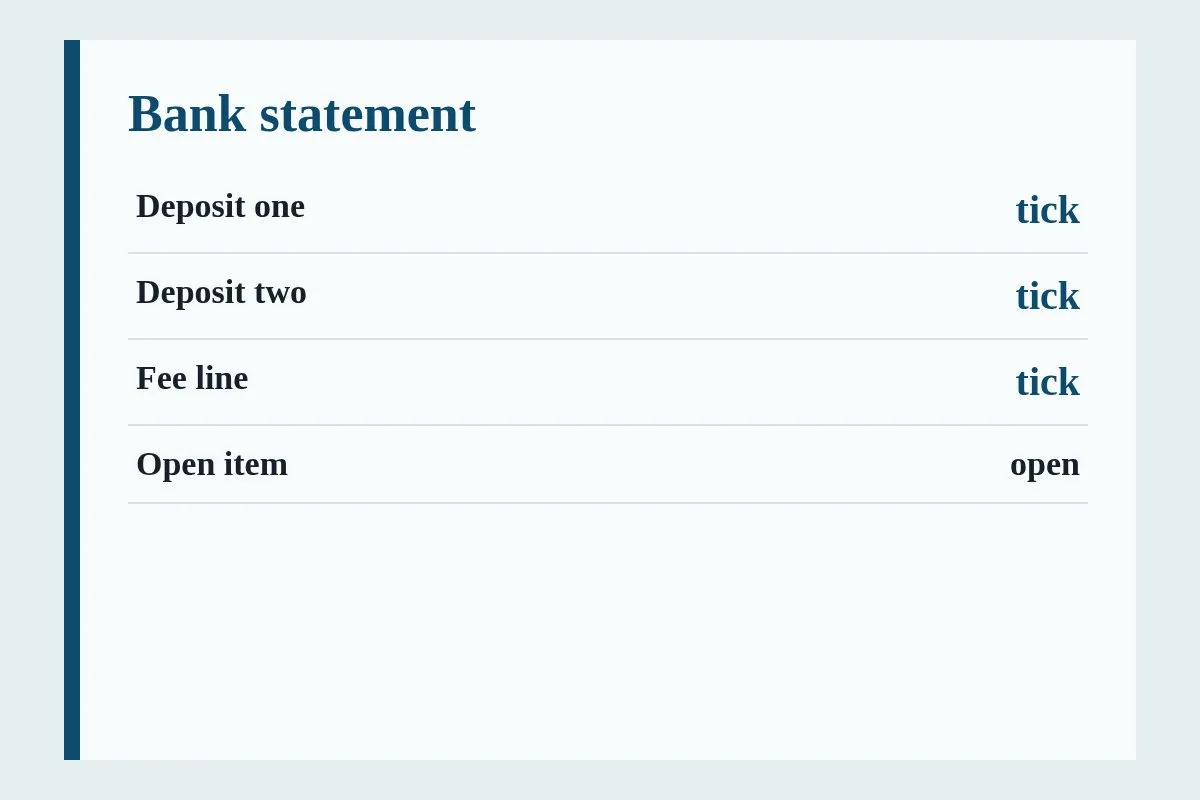
Close the year before March
Before March the prior year has to be closed.
Click to see March ›Tap to see March ›Questions owners actually ask
Bring your question.
Click to see questions ›Tap to see questions ›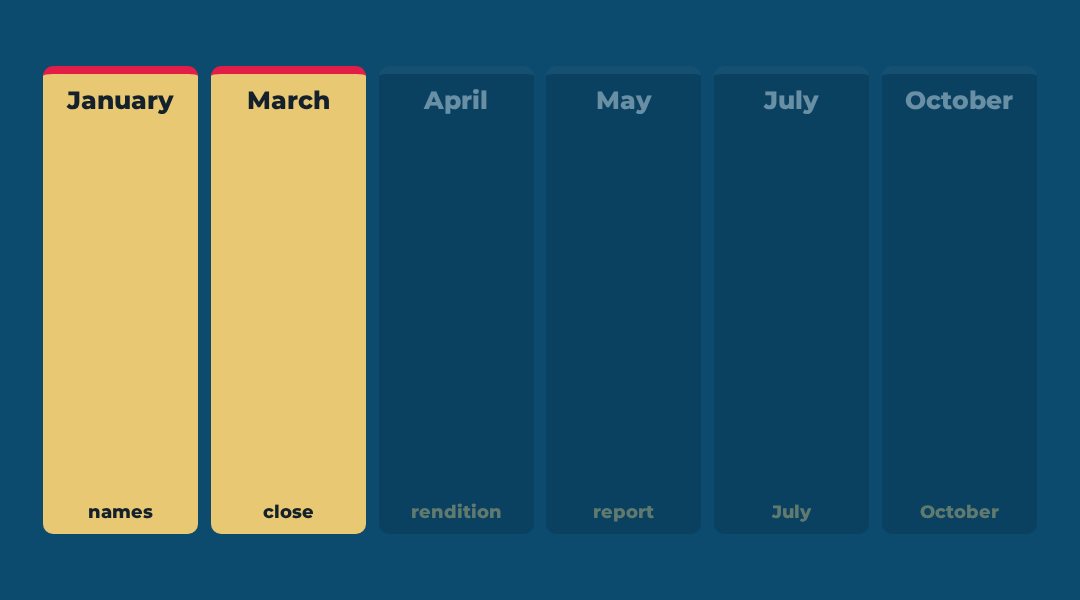
Six dates around the lake
Open one month. Read the filing that month usually carries.
1January
The sales tax for the holiday month is usually due on the 20th. We tie the deposit to the return before that file goes out.
January's income return uses December only after that month has been tied to the bank. The state still wants your signature on the return we prepare.
2March
The franchise report is not due until May, yet March is when the prior year has to be closed enough that May is not a guess.
We start that close while the lake is still cold. Name the invoices that never found a deposit, and the close starts from that list.
3April
Renditions of business personal property cluster around the middle of April. A letter to the appraisal district can stretch that window into the middle of May.
We list what the company owns and the date it was placed in service. You confirm anything we cannot see in the file.
4May
Margin tax paperwork for the company lands in the middle of May. Across report years 2026 and 2027, revenue under 2,650,000 dollars means none of that tax is due.
Retail and wholesale use 0.375 percent. Other businesses use 0.75 percent. We file from the closed year.
5July
Weekend sports at Airport Road, the Landing Point, and the indoor expo on South 205 belong to the kids. The July close still belongs on one set of books.
We enjoy that weekend the way you do, then we look at estimates and the summer sales tax before the year locks.
6October
October is the month when a cool evening still leaves time to change a purchase or a bonus before 31 December.
We read what the year already shows. You decide what can still move.
Steven Palmieri, Tax CFO
The Entrepreneur's CFO, working with owners around Rockwall. Steven and his team tie the month to the bank first, and the return is written from that tie-out.
Meet the practiceWrite both programs in one note
Tell us which program billed the work and which program holds the bank.
You will be talking to the Steven Palmieri practice.
What the month usually means on this site
Read What the month usually means on this site
People arrive with two programs that both think they own the sale. One program is where the job was billed. The other is where the bank is reconciled. Until those two agree, the month is a guess wearing a neat total.
What you get here is a closed set of books, a payroll setup you keep running on a provider, reconciliations, statements, and a return that uses those closed months. Around Rockwall that close is done by Steven Palmieri, under the titles Tax CFO and the Entrepreneur's CFO, together with Steven and his team.
The first close is often the slow one. Old deposits that never found an invoice, fees that were netted by a processor, and a sales tax balance that has been copied forward all show up together. We name them before we pretend the new month is clean.
How a bank feed earns its keep
Read How a bank feed earns its keep
A feed downloads what the bank already knows. It does not decide which invoice a deposit belongs to. A suggested match is a guess from an amount and a date. We accept a match only when the invoice, the deposit, and the fee tell one story.
Unmatched rows stay visible on purpose. Hiding them to make a screen look finished is how a duplicate sale survives until the return. If a check has been open so long that the bank will never see it, we void it or reissue it, and we say which expense moved.
Two programs make this harder, not different. The same customer can pay in the billing program while the books still show the invoice open. The deposit then looks like extra income. We would rather void one invoice than explain a doubled year in March.
Payroll setup, then the provider runs payday
Read Payroll setup, then the provider runs payday
We set up the payroll file with you. The payday run, and the tax deposits that ride with each payday, stay at a payroll company you already use or one you name during that setup. This practice does not run payday, and it does not hold the tax deposits that go with it. If the provider's report and the books disagree, that disagreement is part of the monthly close, not a surprise in January.
Contractors are a cousin of that work. A vendor paid by card is usually outside the January information return. A vendor paid by check or transfer needs a form W-9 before the year gets loud. When the same person is paid from two programs, we add the two totals before anyone files.
The return waits for the closed months
Read The return waits for the closed months
Filing while a month still disagrees with the bank puts a signature on a guess, and we refuse that. Once the months are closed, sales tax, the franchise report, and the income tax return can share one set of figures. You still choose the elections. After December is tied, we can show which of those elections the numbers actually allow.
October is the useful argument, not a slogan. A purchase, a bonus, or a cleanup of old inventory can still change the year. After 31 December the books can be made neat, and the year itself has already happened.
If a lender later wants someone to tell an outsider the figures were examined, we name that on the first call and point to a firm the state lets sign. Disclosures is the only page that walks through the statute numbers. The monthly file can be finished beside the lake while that other firm writes the cover.
What we ask for before the first close
Read What we ask for before the first close
Access to the book file, the last month anyone trusted, and the question you actually have. You can describe the mess before anyone shares a bank password. Any later login is written into the scope, and you shut it off the week the work stops.
Neighbors still get a neighbor's attention. A short term rental here has had to register since the spring of 2024, and we ask the same question we ask of a shop. Did that money land in the company or in a personal account. Downtown, the Main Street grant pays part of a storefront repair back to the shop. We like that square the way you do, and then we ask which program recorded the reimbursement, because a grant in the wrong till is just another deposit the bank will not explain.
The two high schools
Read The two high schools
We like Friday night at Rockwall High or Rockwall-Heath the way you do. The next morning we ask which till that deposit came from.
The roads a carton takes
Read The roads a carton takes
We like I-30 and Highway 205 the way you do, because those are the roads through Rockwall. When a carton leaves on one of them, we read the ship-to before we write the sales tax return.